I'm a Dietitian Who Works With Post-Ozempic Patients and These Are 2 Rebound Mistakes I See Every Single Week


There are truly many amazing weight-loss success stories all over social media that prove just how effective GLP-1 prescription drug Ozempic can be. Although it can be a long, disciplined road, the results can be totally life-changing. But life after Ozempic can be just as challenging as the Ozempic weight-loss period itself, and many patients don't give that part of the journey enough thought and planning. If you don't have new, sustainable habits to follow in place, your hard work will be for nothing.
The way we see it, there are three parts to a solid GLP-1 plan. The first is researching the right prescription drug for you and your lifestyle. The second part is following the course to reach your goal, which may seem like the longest and most important stretch. But the third—and final—part is to maintain new healthy habits that will help keep your transformation for the long-term.
To give you some helpful advice, we spoke with Emma Wood, RDN, LDN, Registered Dietitian Nutritionist with Health Loft, who works with post-Ozempic patients and shares the most common rebound mistakes she sees every single week.
Mistake #1: Not Keeping up With Healthy Lifestyle Habits
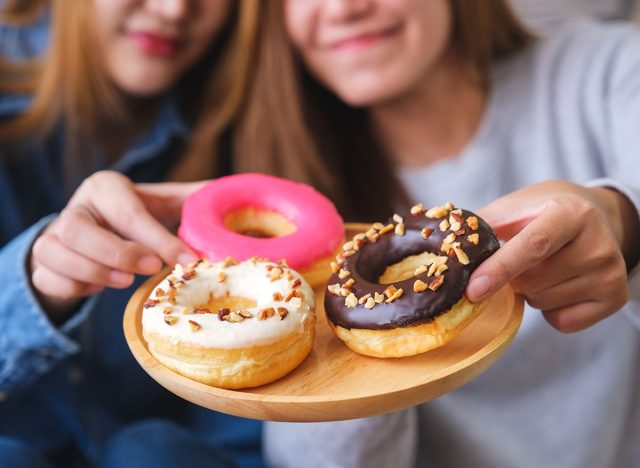
Based on Wood's experience, one of the most major mistakes patients make after stopping weight-loss medication is not maintaining the healthy lifestyle habits that helped them achieve their goal.
"This often includes moving away from balanced nutrition choices and reducing or stopping regular exercise or physical activity habits established during treatment," Wood tells us.
RELATED: 5 Standing Exercises That Shrink Stubborn Waist Thickening Faster Than Cardio After 60
Mistake #2: Trying To "Make Up" for Being off Medication

Another common error is trying to "make up" for stopping the medication by undereating or skipping meals.
"I don't recommend this approach as it typically leads to increased hunger and cravings, making it much harder to maintain progress long-term," Wood explains.
Reverting to Old Eating Habits Could Lead to Rapid Weight Regain
It's important to think of GLP-1 medication as a tool rather than a magical, all-in-one solution. Establishing healthy habits while taking Ozempic—and sticking with them after going off the medication—is imperative for long-term success.
"There's still a lot we don't fully understand about weight regain after coming off weight loss medications, and the degree of regain can vary. However, we do know that GLP-1 medications are one tool within obesity treatment and are meant to be used alongside lifestyle interventions like nutrition and exercise," explains Wood. "Without maintaining the consistent nutrition and lifestyle behaviors established during treatment, it can become much easier for hunger, cravings, and overall intake to increase, which may contribute to weight regain."
Healthy Habits To Start on the Medication—and Maintain

One of Wood's top-recommended habits for patients on GLP-1s is to establish consistency. This includes things like sticking with a regular meal schedule, incorporating filling and balanced snacks, and performing regular exercise.
"It's also important to focus on building balanced meals with enough protein, carbs, and fat to keep them full, and gradually increasing fiber," Wood says. "These habits should be seen as a lifestyle change rather than a short-term approach to better support long-term results."
RELATED: 5 Bed Exercises That Restore Back Strength Faster Than Physical Therapy After 60
The Importance of Meal Structure

Both meal timing and structure can vary depending on the individual. That said, consuming nutritious, well-balanced meals consistently throughout the day, and reaching for healthy snacks as-needed, can be beneficial after coming off a GLP-1.
"[This approach helps support] satiety and managing hunger and cravings," Wood says, adding, "Grazing throughout the day often doesn't provide the same level of fullness or satisfaction and can also lead to more frequent choices of less nutrient-dense foods, which may contribute to a higher overall caloric intake."
For more healthy tips to navigate life after Ozempic, check out I'm a Doctor and These 4 Mistakes Cause Rebound Weight Gain After Stopping Ozempic.


