I'm a Dietitian and These Meal Timing Tricks Mimic GLP-1 Drugs Without Taking Them


GLP-1 medications have been total game-changers for many individuals when it comes to weight loss. But a prescription drug course is not for everyone for several reasons. The cost is high, there are many side effects associated with the drugs, and certain health conditions that make them a non-option. What if we told you there are a few meal timing tricks that mimic GLP-1 drugs without taking them? We spoke with Heather Ritter, MS, RDN, LDN, CNSC, a Registered Dietitian and Intuitive Eating Counselor with Health Loft, who has made it her mission to help individuals develop a healthy relationship with food and their bodies, to learn the scoop.
These Meal Timing Tricks Mimic GLP-1s
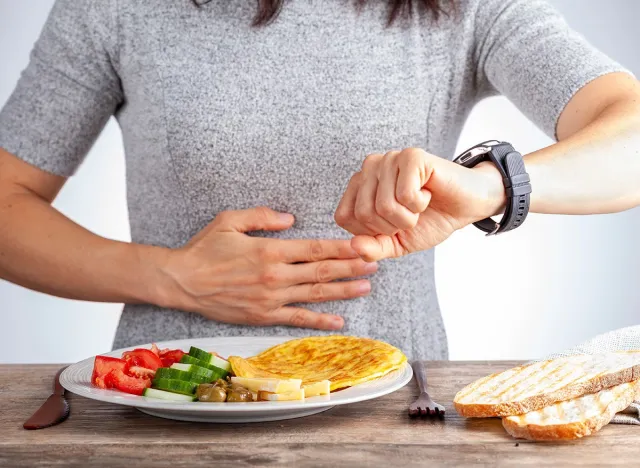
Strategies like consuming protein first, building well-balanced, structured meals with fiber and protein, and eating every three to four hours can yield similar effects to GLP-1 drugs.
RELATED: The 8-Minute Morning Routine That Tightens Arm Flab Faster Than Weight Training After 55
The Power of Fiber and Protein

"A productive meal timing habit is to eat something with protein and fiber within an hour or so of waking. This helps your body to feel satisfied and keeps energy steady throughout the day," Ritter explains. "Eating protein early in the day offers benefits such as stimulating GLP-1 production which can help reduce late-day hunger, improve post-meal blood sugar control, and can decrease evening overeating."
If you're looking for meal inspiration, Ritter provides a few examples:
- Greek yogurt + chia + berries
- Eggs + sautéed vegetables + oats
- Tofu scramble + avocado + high-fiber toast
What To Know About Meal Timing Habits

Meal timing habits can absolutely boost your body's natural incretin response and improve insulin sensitivity. That said, they don't activate GLP-1 receptors at the same intensity as prescription drugs do.
"Meal timing supports satiety but does not replicate pharmacologic appetite suppression," Ritter notes.
RELATED: 4 Daily Exercises That Rebuild Joint Strength After 60
Who Should Be Cautious With Restrictive Timing Strategies

According to Ritter, adults over 50 and those with hormonal imbalances, a history of eating disorders, or individuals with kidney or liver disorders should be cautious when it comes to aggressive fasting or restrictive meal timing.
"Most populations do not benefit from aggressive fasting. Concerns for any aggressive dietary intervention or restrictive strategy include risk of sarcopenia, reduced protein intake, increased risk of falls, blood sugar instability, malnutrition, disordered eating and thyroid/adrenal stress," Ritter tells us. "For these populations, prioritizing protein distribution over prolonged fasting is typically safer and more metabolically protective. A better strategy is to aim for three balanced meals with 20 to 30 grams of protein at each meal and have fiber evenly distributed throughout your meals."
If you're looking to lose weight naturally, check out I'm a Dietitian and These Are 5 Breakfast Swaps That Naturally Trigger the Ozempic Effect After 50.


