I'm a Dietitian and Here's Exactly What to Eat in a Day to Maximize Your GLP-1 Results

When you want to use your diet as a tool to get results, a dietitian can be a great place to start. This is especially important if you're taking prescription weight-loss medication and want to make the most out of your GLP-1 experience. We spoke with Carlyne Remedios, registered dietitian with JM Nutrition, who shares exactly what you should eat in a day to maximize your GLP-1 results.
What To Prioritize
According to Remedios, protein should be a top priority in your meals. This nutrient promotes satiety, keeping you fuller for longer.
"GLP-1 medications reduce appetite and overall calorie intake, which increases the risk of losing lean body mass during weight loss," explains Remedios. "To preserve muscle while promoting fat loss aim for 1.2 to 2.0 grams of protein per kg body weight per day during the weight loss phase and 0.8 to 1.2 grams of protein per kg body weight per day during the weight maintenance phase."
The Importance of Protein
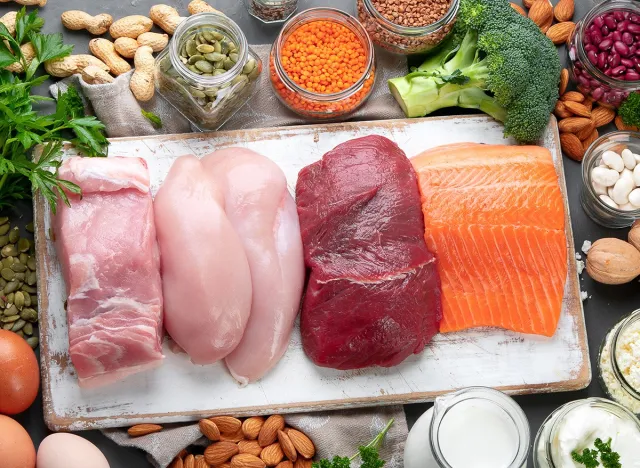
GLP-1s suppress appetite and significantly decrease calorie intake. While this positively impacts weight-loss efforts, it also reduces protein intake—unless protein is made a top priority.
"In a calorie deficit, the body shifts from a protein-sparing state, and muscle tissue is broken down to meet energy and amino acid demands. This results in loss of lean body mass alongside fat loss," Remedios explains.
Consuming sufficient protein is essential because muscle loss reduces resting metabolic rate, decreases functional capacity and strength, and makes long-term weight management more difficult.
The Ideal Plate Distribution
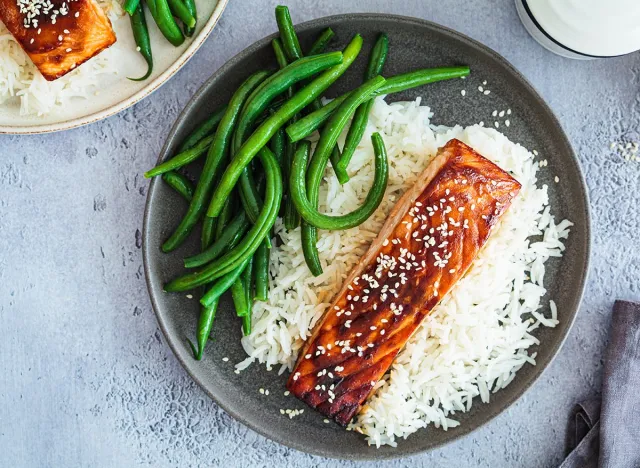
An ideal plate should look a little something like this:
- Roughly ⅓ should be high-quality protein
- Half should be non-starchy veggies
- The remaining portion should be healthy fats and whole grains
Other Important Nutrients To Include
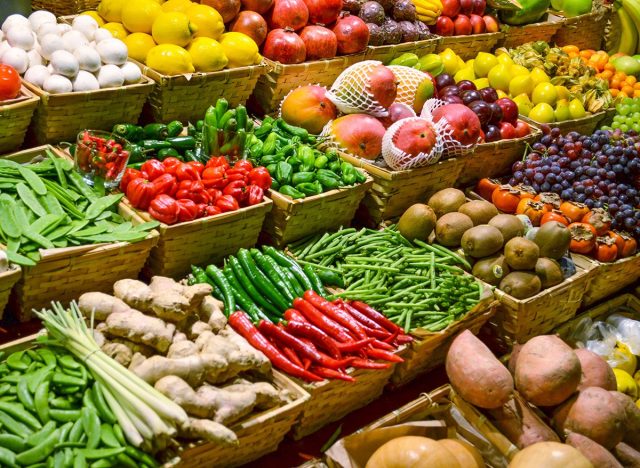
"Prioritize protein first at meals, followed by fiber-rich non starchy vegetables, and then carbohydrates and fats as appropriate. Emphasis should be placed on nutrient-dense foods rather than energy-dense options," Remedios says.
Consuming sufficient fiber is essential. A reduction in food intake and slowed gastric emptying can make you more susceptible to constipation.
"Aim for 25 to 30 grams of fiber daily, primarily from vegetables, fruits, whole grains and flax or chia seeds," Remedios suggests. "Considering a probiotic (ideally one that contains Lactobacillus and Bifidobacterium can help with regular bowel movements)."
In addition, healthy fats—like seeds, nuts, and olive oil—should be included moderately to promote fat-soluble vitamin absorption.
Make sure to drink plenty of water as well. "Hydration is critical. A minimum of two liters of fluids daily, primarily from water or non-sugary beverages," Remedios adds.
Which Foods Can Worsen Side Effects
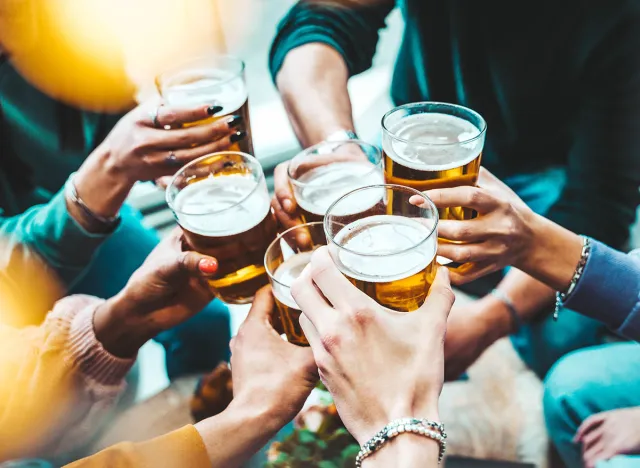
Certain foods can worsen gastrointestinal symptoms—especially during dose titration. In order to manage symptoms, Remedios recommends limiting sugary, high-fat foods and beverages, alcohol, large portion sizes, and carbonated beverages.
"Practicing mindful eating strategies can help improve tolerance and reduce side effects. It is important to eat slowly, pause between bites, and stop at the first sign of fullness. Consuming smaller, more frequent meals can also help manage GI symptoms as compared to large meals," Remedios tells us. "Although adequate fiber intake is important for bowel regularity, it should be increased gradually rather than all at once. A sudden increase in fiber intake can worsen bloating, gas, or abdominal discomfort. Gradual adjustments, combined with adequate hydration, help support gastrointestinal comfort and overall tolerance."
If you're curious about what else GLP-1s can do, check out 5 Surprising Health Benefits of GLP-1 Drugs That Have Nothing to Do With Weight Loss.


