I'm a Neurology Nurse and Here Are 5 Things Ozempic Is Doing to Your Brain Right Now

Everything you do to your body can help—or hurt—your brain health. That includes the foods and beverages you consume, the exercises you perform, the medication you take (prescribed or otherwise), and your surroundings. Weight-loss drugs are no exception to the rule. In fact, we spoke with Kiara DeWitt, Certified Neurology Nurse, Head of Clinical Operations at Medical Director Co., and Founder & CEO at Injectco, who educates us on how Ozempic impacts brain health.
GLP-1s can be an effective tool to reach your weight-loss goals, but how exactly are these prescription drugs affecting your mind?
GLP-1s Are "Under-Appreciated" in the Neurobiology World
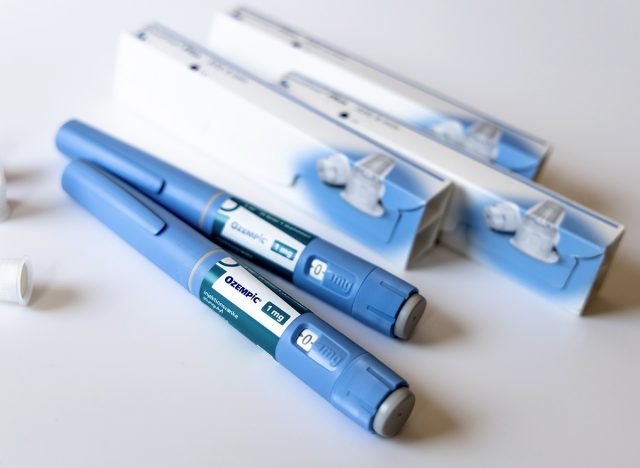
As far as neurobiology is concerned, DeWitt says that GLP-1s are largely underrated in this space.
"This is either due to an ignorance about these 'second wave' medications or an over-simplification of "calories in, calories out," DeWitt explains.
RELATED: How to Save Money and Maximize Results on GLP-1 Medications, According to an Expert
They May Help Address Cognitive Decline and Offer Mood-Boosting Benefits

According to DeWitt, GLP-1s impact the brain in ways that go beyond simply suppressing the appetite.
"GLP-1 receptors are also present in the hippocampus (memory and learning area of the brain)," DeWitt tells us. "It's possible that activation of these sites is providing neuro-protective effects and/or slowing age-related cognitive decline. I believe it is possible that we are looking at inflammation reduction and improved regulation of impaired glucose metabolism in the brain."
The brain craves stability. When you're navigating a constant state of blood sugar highs and lows, the brain is often the first place where symptoms appear.
"This cascade of stimulation and withdrawal is interrupted with GLP-1s, which may lead to improvements in mood stability, concentration, and overall mental function," DeWitt explains.
They Can Reduce Stress-Based Eating

GLP-1s also calm the "emotional" part of the brain—the amygdala. This may help decrease compulsive or stress-based eating habits.
"Patients describe this as 'food just not having that hold on me it once did.'" It is not about willpower—it is about motivation," DeWitt says. "Food is no longer an escape because food has lost its emotional power. When it loses its emotional power, that makes lifestyle change stick."
RELATED: 5 Things to Know Before Taking a GLP-1 Drug, According to a Nurse Who Takes It
They Might Cause Brain Fog

Like any drug on the market, GLP-1s come with some caveats. While they can help improve mood, DeWitt says many patients have also reported mood flattening and brain fog.
"[This] can also come from dehydration (loss of appetite = less water intake) and rapid weight loss (which can cause electrolyte imbalances and starvation of the brain)," DeWitt explains. "Brain function depends on nourishment and hydration, after all. Motivation from a medication is only as good as one's daily structure. If one allows the brain to slide in support of one's nutritional intake, it will fight back against itself."
RELATED: 10 GLP-1 Medication Lies You Should Stop Believing, Says Nurse
Experts Are Following on the Long-Term Neurological Effects of GLP-1s
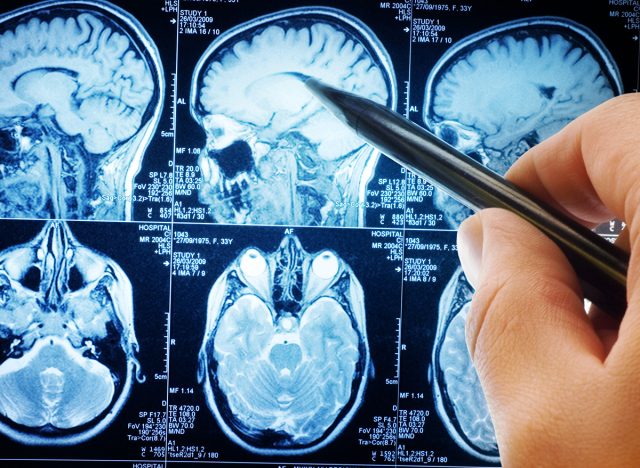
The long-term neurological effects of GLP-1s are still being studied, such as fatigue, memory impairment, and damage to the dopamine system.
"At this point, all we have is hypotheses. When you alter the way the brain receives food rewards and monitors hunger signals, you open the door to side effects," DeWitt notes. "Any medication that alters neurotransmitters and neuromodulators in the brain is going to have long-term consequences."


