I'm a Doctor and Here's What Actually Happens to Your Body When You Take a Copycat GLP-1 Drug

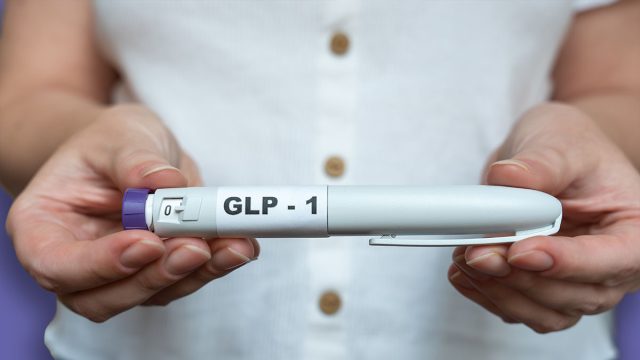
Copycat versions of GLP-1 medication can offer a significantly lower price tag than brand names, which makes them incredibly appealing. But what are the real pros and cons of choosing a compounded or "copycat" GLP-1 versus opting for a brand name? We spoke with Dr. Roberto Valledor, MD, Collaborating Physician for Texas-based Nurse Practitioners within Mochi Health's telemedicine platform, overseeing GLP-1–based obesity treatment protocols and ensuring top-notch clinical care, to learn what actually happens to your body when you take a copycat GLP-1 drug.
What Is a Copycat GLP-1?

According to Dr. Valledor, the term "copycat" GLP-1 was coined by the media to distinguish between brand-name drugs and compounded versions.
"From a medical standpoint, what they're actually usually referring to is a compounded GLP-1 receptor agonist (e.g. semaglutide or tirzepatide), that is prepared by a licensed compounding pharmacy based on a valid prescription," Dr. Valledor explains. "Compounding has been a legitimate part of pharmacy practice for decades. It exists specifically to give patients access to medications that are tailored to their specific needs. Whether that means removing an ingredient a patient is allergic to, adjusting a dose, or adding something their provider has determined would improve tolerability. It's a personalized approach to medicine, and for many patients, it's the reason they're able to access treatment at all."
RELATED: The 8-Minute Morning Routine That Tightens Arm Flab Faster Than Weight Training After 55
What To Know About Brand Name vs. Copycat GLP-1s
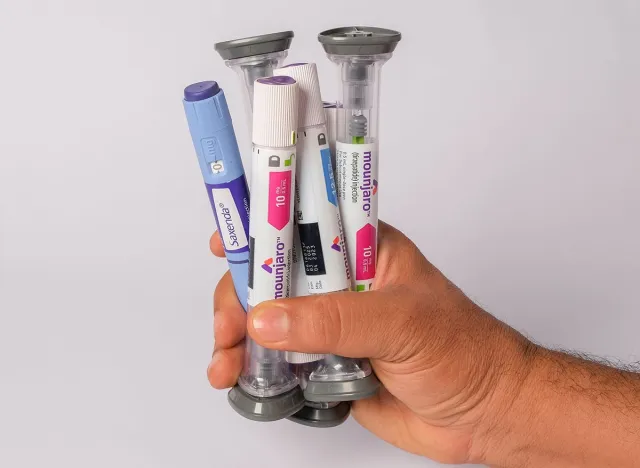
Brand-name GLP-1s are created in a factory. They have a steady strength and are vigorously tested for consistency and stability. On the other hand, compounded GLP-1s are made by a licensed pharmacist.
"While not FDA-approved, compounding pharmacies are overseen by state and federal authorities and must adhere to strict safety standards. Compounded GLP-1s sourced from a reputable, accredited compounding pharmacy, deliver the same active ingredients as the brand-name medications," Dr. Valledor tells us.
The main difference between the two is not in efficacy, but in price tag. If you don't have insurance or a solid plan, brand name GLP-1s can quickly run more than $1,000 per month.
"Compounded versions can bring that cost down dramatically, which significantly impacts adherence as people are able to realistically stay on treatment long enough to see results," Dr. Valledor tells us.
Consistency Is Key For Both
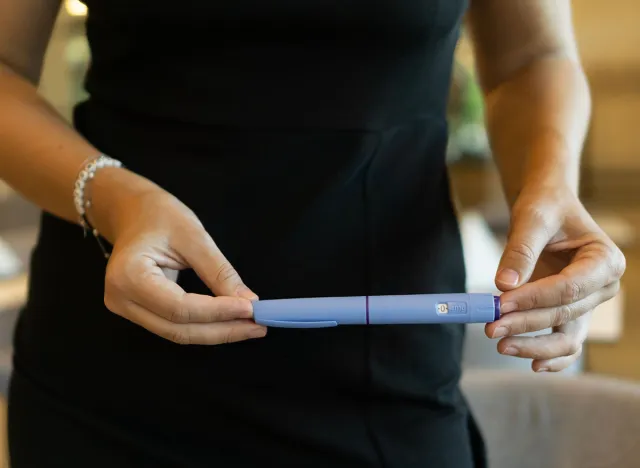
GLP-1 drugs work by binding to certain receptors in the gut, brain, and pancreas to control blood sugar and appetite. Consistency is essential in order to reap the full benefits of GLP-1s
"This is the same for any medication—name brand or compounded," Dr. Valledor points out.
RELATED: 4 Daily Exercises That Rebuild Joint Strength After 60
Compounding Pharmacies Meet Strict Standards

Compounding pharmacies are required to fulfill strict standards to ensure correct dosing, consistent absorption rates, and active ingredient accuracy. It's essential to have a provider who knows exactly how to dose and titrate.
"If patients can no longer afford the name brand drugs, and there is no other option, they will discontinue use," Dr. Valledor says. "I would much rather see a patient use a compounded medication properly, than to discontinue use because they can't afford it. It's the continued use of a medication, at a properly titrated dose, that has the impact on chronic disease."
RELATED: If You Can Complete This 5-Minute Chair Test at 55, You're in Peak Shape
The Method Is The Same
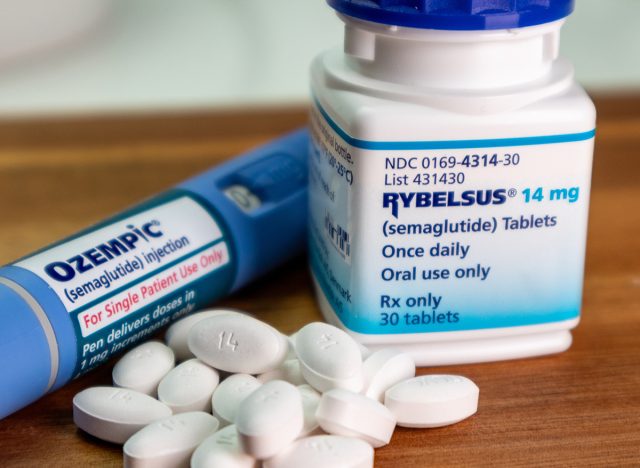
According to Dr. Valledor, the mechanism is the same for both brand-name and copycat GLP-1s.
"GLP-1 receptor agonists mimic the signal the body makes when you eat to tell the pancreas to send insulin, to tell the stomach to wait for food to clear, and to tell your brain to stop eating," Dr. Valledor tells us. "If the active ingredient is the same and the dosage is the same, it doesn't matter whether the drug comes from a pharmaceutical company or a compounding pharmacy. What makes the difference is whether someone can afford to continue to take the medication, and for some, the ability to afford a compounded GLP-1 is the only reason they can stay on the medication."
To learn more about GLP-1s, check out I'm a Doctor and Here Are 5 Reasons Most People Over 55 Regain Weight After Stopping Ozempic.


