I'm a Strength Coach and These 4 Moves Reverse Muscle Loss on GLP-1 Meds


GLP-1s have grown in popularity in recent years—for good reason. Originally prescribed to treat type-2 diabetes, medications like Ozempic and Wegovy are now also helping individuals achieve significant weight loss. As with any weight-loss journey, muscle loss is a common concern. So, we spoke with an expert who shares four exercises that help preserve muscle during weight loss on GLP-1s.
"An issue I deal with on a daily basis involves individuals striving to shed pounds but not wanting to sacrifice strength," explains Alex Lee, licensed strength and conditioning coach, physiotherapist, and founder of Saunny.com. "At my clinic and gym, I see many patients taking GLP-1 medications. The goal of my work involves preserving muscle, joints, and functional ability during this process of transformation and adaptation."
Strength Training With Weights
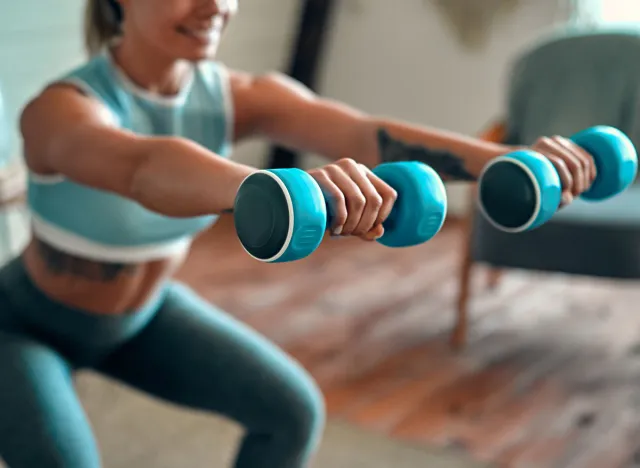
Strength training with weights is one of the best things you can do for your body in order to build and preserve muscle during weight loss. Lee recommends exercises like lunges, squats, rows, and presses.
"These actions provide positive stress for your muscles and bones. Positive stress tells your body, 'Keep your muscle tissue.' This is called muscle protein synthesis," Lee explains.
Slow and Controlled Movements

Maintaining a slow tempo during workouts equates to increased time under tension.
According to Lee, "This promotes muscles working hard even when the calorie intake is low. I frequently incorporate slow lowering phases of exercises while training."
Single-Leg or Single-Arm Exercises

Exercises like step-ups, split squats, and single-arm rows are worth adding to your workout routine.
"These exercises help develop neuromuscular coordination and balance and reduce the strain on the body when it is fatigued," Lee tells us.
Short Power Movements

Short power movements include exercises like light kettlebell swings and medicine ball throws.
"These exercises are used to keep fast muscle fibers called type-II fibers in good condition and are important for strength and preventing falls," Lee says.
Why Muscle Loss Is Even More Serious for Those on GLP-1s
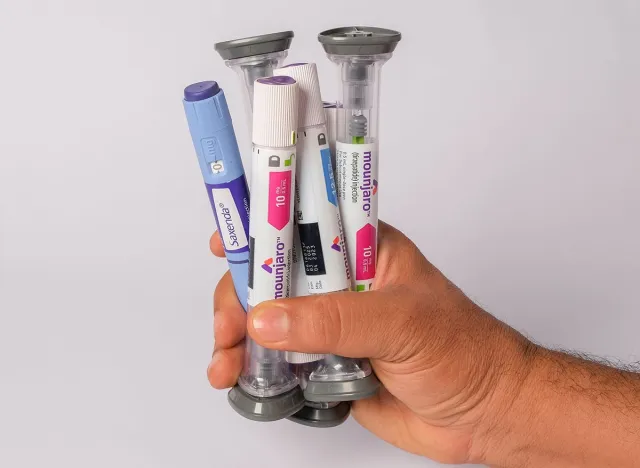
GLP-1 meds serve as appetite suppressants and work to slow down the digestive process.
"Many patients eat significantly reduced amounts of protein without even realizing the change. Less food combined with reduced training translates to muscle tissue breakdown or loss of lean mass," Lee explains.
Following a traditional diet can take much longer, while GLP-1s yield quicker weight loss.
"At the same time, the body may be losing muscle mass even as it loses the pounds, if there's no weight training. This can be evident in my clients, even if they feel that they are weaker even as the scale reveals that they are losing weight," Lee adds.
How Lee Changes His Training When Clients Start GLP-1s

Lee tweaks his workout programming immediately for clients on GLP-1s to protect both muscle and recovery. Here are the changes he implements:
- Less exercise, higher quality
- Full-body training instead of split routines
- Greater emphasis on building strength and power and less attention on cardio
- Greater rest and recovery to avoid dizziness and fatigue
- Additional recovery techniques, including infrared heat and mobility work
How Often To Perform Strength Training
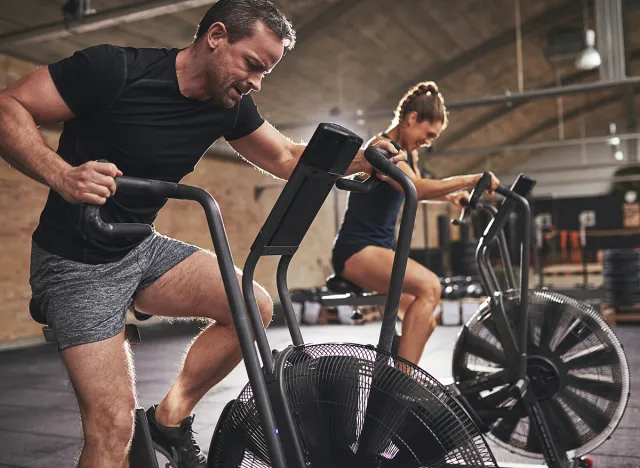
Lee recommends strength training at least three days a week. For best results, aim to include strength exercises into your workouts three to four times per week.
"Walking and light exercise aid circulation and blood sugar. Resistance exercise maintains muscle activity," Lee explains. "Muscle helps support joints, posture, and metabolism."
In addition, avoid these common mistakes:
- Performing too much cardio and not enough weight lifting
- Training to the max and not eating enough
- Skipping out on rest and recovery
- Ignoring fatigue and weakness
"Fast weight loss can be stressful to the body. Muscles require an appropriate signal to maintain them strong. The signal is intelligent muscle building," Lee says.
For major weight-loss transformation inspiration, check out I Lost 100+ Pounds on Mounjaro and This 'Guilty Pleasure' Breakfast Helped Me Do It.


