I'm a Pharmacist and These 3 Supplements Are Non-Negotiables for Anyone on a GLP-1

GLP-1 drugs such as Ozempic, Wegovy, and Mounjaro have quickly become some of the most discussed—and popular—prescription drugs on the market. What started as a medication primarily for those with type-2 diabetes, these drugs have quickly become go-to ways to fast-track weight loss and management. Many individuals have achieved incredible results.
If you're currently taking GLP-1 meds, healthcare professionals stress the importance of maintaining muscle mass as you slim down. The reason is simple: Adults naturally lose 3% to 8% of lean muscle every decade after reaching 30 years of age. Weight loss can speed up the process. Regular strength training should be a top priority—but that's not all. There are also a few supplements pharmacists deem non-negotiables for individuals taking GLP-1s. We learned what they are and why they're so important.
Who benefits the most from supplementation? Certain age groups—such as those 50+—as they don't absorb these nutrients as effectively, says superintendent pharmacist Abbas Kanani, MRPharmS.
"In addition, people with low levels of any of these before starting treatment [can majorly benefit from supplementation,] because eating less can lead to them reducing their intake of these nutrients," Kanani adds.
Multivitamin
According to Kanani, some patients may find supplementation helpful—however, it's not necessary for everyone.
If supplements are deemed appropriate for your weight-loss journey, Kanani first suggests taking a multivitamin.
"This can help support the balance of missing nutrients from eating less," Kanani explains.
If you skip multivitamins while on GLP-1s, Kanani says there could be risks if you have a known deficiency.
"Multivitamin skips could mean the person is at risk of missing vitamins and nutrients, reduced immunity, low energy levels, and generally feeling run down," Kanani tells us.
RELATED: 10 GLP-1 Medication Lies You Should Stop Believing, Says Nurse
B12
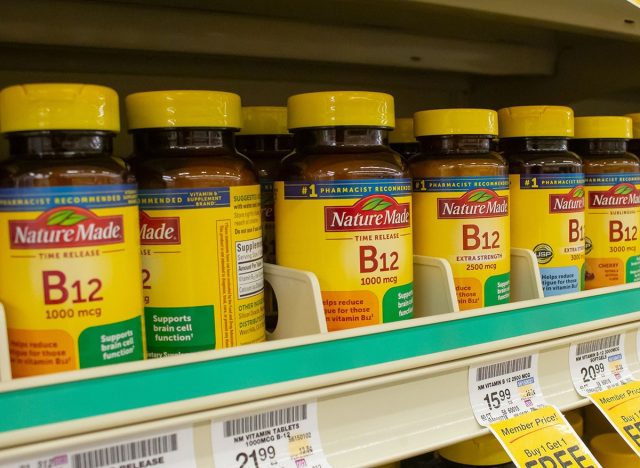
Another supplement worth checking out? B12. This water-soluble vitamin is naturally provided by certain foods—beef, salmon, tuna, eggs, cow's milk, and dairy products—and can be taken in dietary supplement form.
"B12 absorption can sometimes dip with slower digestion and reduced calories, so a B12 supplement may be suggested if levels are low after taking a blood test," Kanani tells us.
Not taking a B12 supplement could lead to low mood, fatigue, difficulty concentrating, or nerve issues if your deficiency is chronic.
RELATED: 5 Things to Know Before Taking a GLP-1 Drug, According to a Nurse Who Takes It
Protein Supplement
And when it comes to protein—a key nutrient for anyone on weight-loss meds—Kanani says that if you're not getting enough, a protein supplement—like whey or casein—can help increase your levels.
Not getting sufficient protein can lead to muscle weakness, muscle loss, and a slower metabolism, which in turn makes losing weight in the long run more challenging.
If you're concerned about any interactions, Kanani says, "There are no known direct interactions with any of the above supplements, so they should not affect the absorption of GLP-1."
RELATED: How to Save Money and Maximize Results on GLP-1 Medications, According to an Expert
How To Ensure You're Taking Supplements Wisely

When taking GLP-1s, it's crucial to hone in on every aspect of your wellness routine—including any supplements. To ensure you choose exactly what your body needs, Kanani recommends getting routine blood testing.
"This can help identify any possible deficiencies and confirm whether you need to supplement," Kanani says. "Most people do get all of the nutrients they need from diet, however, as GLP-1 is an appetite suppressor, patients may be at an increased risk of a deficiency especially if they are already on a restricted diet, for example vegan, or an older adult as mentioned earlier."


