I'm a Nurse Who Prescribes Ozempic and These Are the 4 Warning Signs Your Dose Is Wrong


Being obese can place you at serious risk for many chronic conditions, including heart disease, stroke, and type-2 diabetes. The flip side? There's no better time than the present to address obesity with many prescription weight-loss drugs options available for consideration. The point here is that every flip side comes with pros and cons.
Taking prescription weight-loss meds is something to be taken quite seriously, as everything comes with risks. Any course of medication should be under the guidance of a healthcare professional. It's also imperative to educate yourself and know what's involved with what medication you're taking, along with common—and uncommon—side effects you may experience.
We spoke with Kiara DeWitt, Certified Neurology Nurse, Head of Clinical Operations at Medical Director Co., and Founder & CEO at Injectco, who prescribes Ozempic and shares four warning signs your dose is wrong.
The first thing DeWitt emphasizes to new GLP-1 patients? With the proper dose, things remain stable and should not cause any pain.
4 Warning Signs Your Ozempic Dose Is Too High
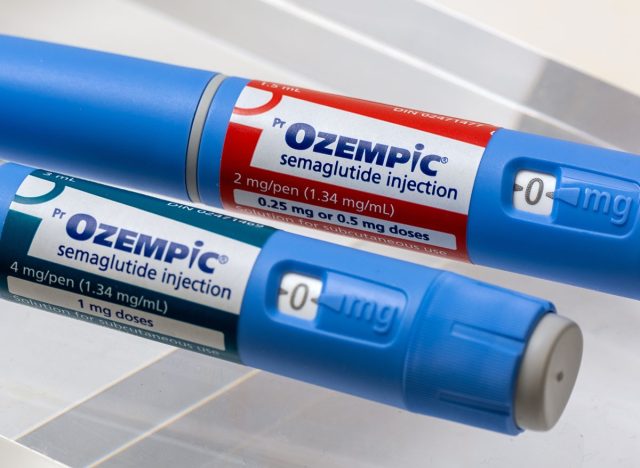
DeWitt says a dose that's too high can hit "like a brick wall—it's never subtle!" Here are some glaring warning signs to look out for.
Fatigue

A common red flag is flat-line fatigue.
"Not just lethargy, but actual, unmovable heaviness in the body that is not improved by rest or movement," DeWitt explains. "That is typically the mitochondria crashing due to starvation and the stomach suddenly slowing down."
RELATED: How to Save Money and Maximize Results on GLP-1 Medications, According to an Expert
Nausea

You may also experience nausea, which typically worsens as the days pass—especially after eating a high-protein meal.
Lack of Drive

You may also notice increased irritability or lack of motivation, especially if you skip meals.
RELATED: 10 GLP-1 Medication Lies You Should Stop Believing, Says Nurse
Early Satiety Becomes Quite Intense

Last but not least, early satiety becomes very intense—so much so that you may not be able to finish half a protein bar. This can occur suddenly and is typically accompanied by reflux or bloating.
"That usually means that the body is shutting off eating, not modifying how it eats," DeWitt explains.
How to Tell When Your Dose Is Too Low

If your dose is too low, the opposite issues start to occur.
"Hunger signals do not subside, cravings increase in the late afternoon/evening, and weight loss plateaus," DeWitt notes. "That means your metabolism is still defending your body mass because the medication effect is too low. Energy levels do not change and the mental boost that got you to eat well never manifests. If someone is working very hard to eat well and their weight has not changed for more than four weeks, that is a clear indication the dose is not working."
RELATED: 5 Things to Know Before Taking a GLP-1 Drug, According to a Nurse Who Takes It
Red Flags Are Not "Normal" and Need To Be Addressed
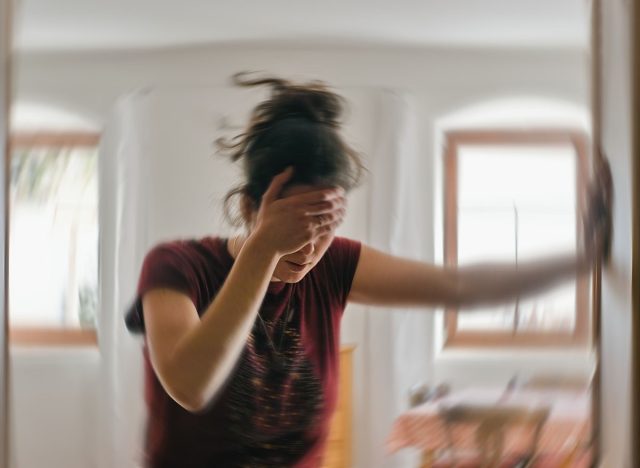
Don't overlook red flags. If something feels off, it usually is.
DeWitt says these can include any combination of the following: dry heaving without nausea, vomiting more than twice within 24 hours, sharp changes in your resting heart rate, or intense dizziness that keeps you from walking or driving safely.
"If you experience severe stomach cramps that last more than two hours—particularly if it happens after every meal regardless of what is eaten—that suggests that your stomach is not emptying properly or is taking too long to empty. Rebound hypoglycemia is another major red flag, especially if accompanied by tremors or confusion," DeWitt adds.
Another tip from DeWitt? Focus on how comfortable and stable you feel rather than obsessing over the number on the scale each week.
"Hydration, micronutrient sufficiency, and eating an adequate amount of protein during titration are far more important for long-term success than dose strength," DeWitt says.


