I'm a Doctor and Here's the Real Reason Weight Loss Gets Harder After 50 That Nobody Explains


Weight loss is a unique journey for everyone. It often involves making certain lifestyle tweaks like adopting nutritious eating habits, managing stress, following a regular workout routine, and establishing a calorie deficit. As you age, weight loss can become more challenging due to natural changes that occur in the body. We spoke with Dr. Scott Cherry, Chief Medical Officer & Physician at Axiom Medical, who is Board Certified in Public Health and Preventive Medicine; Board Certified in Occupational and Environmental Medicine. Below, Dr. Cherry shares the real reason weight loss gets harder after 50.
Why Weight Loss Becomes More Difficult With Age
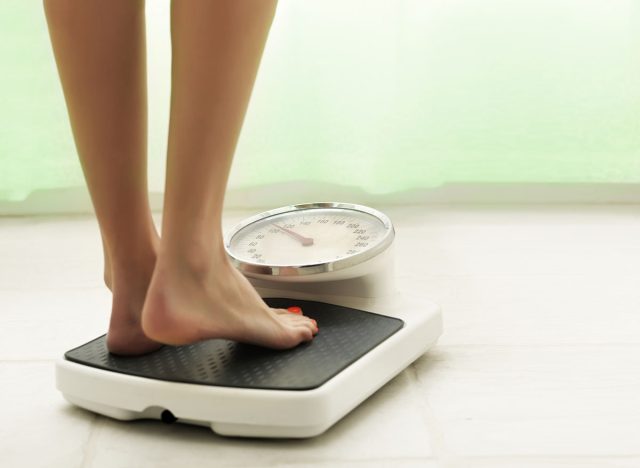
As you age, you naturally lose lean muscle. According to Dr. Cherry, muscle declines at an estimated half-a-pound each year, without regular resistance training and sufficient protein.
RELATED: The 5-Minute Morning Routine That Flattens Stubborn Lower Belly After 50, According to a Coach
The Truth About Muscle Loss

"In adults, 3% to 8% of muscle mass is lost per decade after the age of 30, and this rate of loss is accelerated past the age of 50," Dr. Cherry tells us. "Lower muscle mass leads to fewer calories being burned, irrespective of activity and diet. This is often overlooked because scales don't distinguish between muscle loss and fat gain, so you don't see it, though metabolic consequences are easy to miss."
How Hormone Shifts Impact Fat Distribution

A decline in progesterone, estrogen, and testosterone shift the way fat is stored in the body, causing it to gravitate toward the belly.
"Estrogen is an important factor in the control of insulin sensitivity and fat metabolism, which leads to accumulation of visceral fat in cases of lower estrogen levels," Dr. Cherry shares. "Likewise, testosterone helps maintain lean muscle mass and lower levels may lead to a lower metabolism. These hormonal changes also disrupt appetite control, making hunger and fullness signals less accurate."
Weight-Loss Strategies To Prioritize After 50

As you age, your focus should be on building and maintaining lean muscle rather than cutting calories. In addition, lifting weights is more metabolic compared to cardio, which helps preserve lean mass.
"Furthermore, the pattern of protein consumption during the day becomes relevant, as aged muscle responds differently to nutrient signals," Dr. Cherry notes. "We often overlook recovery, and chronic stress and lack of sleep increase cortisol, which is responsible for storing fat around the abdominal region."
RELATED: 5 Daily Exercises That Restore Muscle Faster Than Gym After 55, According to a Trainer
Common Weight-Loss Myths

According to Dr. Cherry, the food industry has created a common misconception that weight gain is an unavoidable part of aging. That couldn't be further from the truth.
"I often explain that metabolism is not "broken," but it is operating under different physiological conditions. These changes can be understood, allowing people to protect their metabolism rather than just cutting calories," Dr. Cherry says.
For more healthy aging inspiration, be sure to check out 7 Critical Mistakes to Avoid After 50, According to a Top Expert.


