I'm a Doctor and Here's What Really Happens to Your Body After One Year on Ozempic

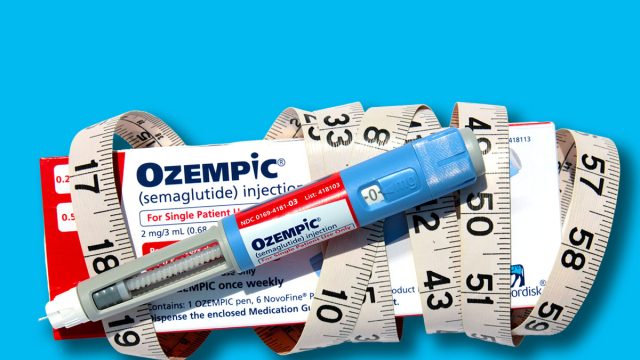
You may have decided to take the Ozempic road to weight loss. If so, kudos to you! Everyone's choice is different, however, and it's not always an easy decision. One thing's for sure: If you're overweight, it's absolutely essential to consider weight loss in order to avoid obesity-related health risks, including type-2 diabetes, stroke, heart disease, high blood pressure, high cholesterol, osteoarthritis, cancer, depression, and more.
Losing weight can be completely life-changing—mentally, emotionally, and physically. But if you're on the fence about embarking on a course of Ozempic, it's helpful to have a keen understanding of what really happens to your body after taking the prescription drug for a year—not just the symptoms and overall outcome.
To learn everything there is to know, we spoke with MDs. Knowing the entire picture in advance can help you decide whether Ozempic is the right choice for you.
The Question Many Ozempic Patients Ask
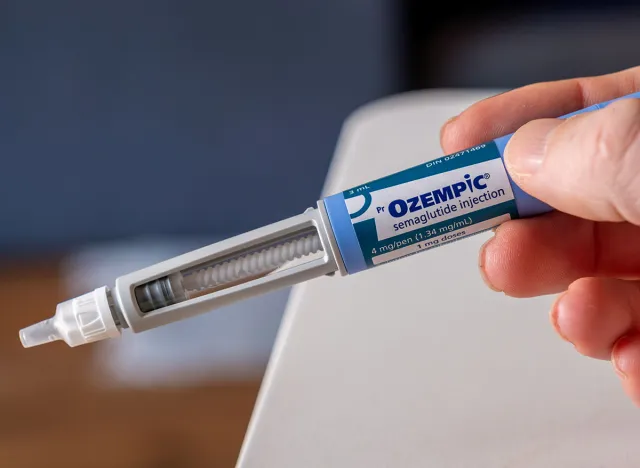
According to Dr. Joshua Jacobson, a board-certified plastic surgeon based in Beverly Hills who works with patients before, during, and after substantial weight loss—including those taking Ozempic—there's one common question he hears time and time again.
"A large part of my practice is dedicated to caring for patients who have undergone major weight loss, sometimes exceeding 200+ pounds. Many of my patients on Ozempic or weight loss medications in general, come in unsure about when the 'right time' to start the medication or when to consider surgery—before, during, or after weight loss," Dr. Jacobson says. "The answer depends on the individual, their goals, and how their body is responding to weight loss."
Based on what MDs see in their daily practice, these are some things that can happen to your body after one year on Ozempic.
Muscle Loss

As you lose weight, the loss of lean muscle is a common concern, which is why consuming a protein-rich diet and performing regular resistance exercise is so important.
"Muscle loss is one of the most overlooked issues and can affect metabolism and body shape without proper strength training and protein," Dr. Jacobson stresses.
Slower Weight Loss
According to Dr. Jacobson, early weight loss is quite rapid due to Ozempic suppressing one's appetite. However, after one year on the prescription drug, weight loss typically slows down or hits a plateau. Results greatly depend on healthy lifestyle habits rather than the medication on its own.
Improved Insulin Sensitivity

After one year of taking Ozempic, expect your insulin sensitivity to improve.
"Insulin sensitivity often improves, but resting metabolism can decrease, especially if muscle mass is lost," Dr. Jacobson points out.
Stable Appetite Regulation

"Appetite regulation becomes more stable with long-term use as GLP-1 signaling continues to support earlier satiety and reduced caloric intake," explains Dr. Alexander Zuriarrain, MD, FACS, a board-certified physician and Medical Director of Hydrology Wellness in South Miami, FL.
Improved GI Symptoms

Most unpleasant side effects of taking weight-loss drugs—like GI upset and nausea—tend to improve or stabilize over time as your body adapts to the medication, Dr. Zuriarrain says.
If you're curious what happens to your body when you wean off the medication, check out 5 Body Changes Doctor Warns Happen When Patients Stop Taking Ozempic.


