I'm a Doctor Who Prescribes Ozempic and These Are the 3 Warning Signs I Tell Every Patient to Watch For


Taking weight-loss medication like Wegovy and Ozempic requires careful thought and consideration. While many people have achieved significant weight loss on GLP-1s, these prescription drugs shouldn't be taken lightly. As with any medication, they come with potential side effects—some more serious than others. So, we spoke with a doctor who prescribes Ozempic who shares three key warning signs he tells every patient to watch out for.
How Ozempic Works
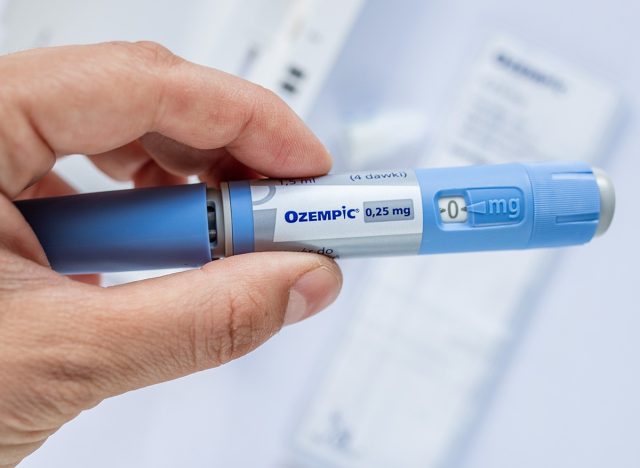
"Ozempic (semaglutide) works by copying a chemical in the body called GLP-1, which is released after meals and makes you feel full," explains Dr. Roberto Valledor, MD, Collaborating Physician for Texas-based Nurse Practitioners within Mochi Health's telemedicine platform, overseeing GLP-1–based obesity treatment protocols and ensuring top-notch clinical care. "It slows down how quickly your stomach empties and also reduces blood sugar levels, which is why it can treat both diabetes and obesity."
The prescription drug reduces hunger and has a hormonal effect on your body's response to foot.
The 3 Warning Signs an MD Stresses With Ozempic

When it comes to taking Ozempic, it's important to be mindful of three warning signs: extreme alterations in heart rate, severe abdominal pain, and anaphylaxis symptoms.
Severe Abdominal Pain

According to Dr. Valledor, severe abdominal pain is the most concerning of these warning signs.
"There have been cases of pancreatitis (inflammation of the pancreas) due to Ozempic, and the pain is severe, constant, and usually goes through to the back. That is not a 'wait and see' symptom," Dr. Valledor explains.
Quick or Pounding Heart

A fast or pounding heart is another red flag to look out for.
"Some people see a change in heart rate, especially in the beginning, and again this is something that could be nothing to be concerned about, but I don't want you to think it's nothing. It's important to talk to your provider if symptoms get worse," Dr. Valledor stresses.
Severe Allergic Reaction

While a severe allergic reaction is typically uncommon, Dr. Valledor notes that if it occurs, the reaction can progress quite quickly. Symptoms can include lip swelling, facial swelling, throat swelling, hives throughout the body, and difficulty breathing.
RELATED: 5 Exercises Women Over 55 Should Do Each Morning to Reduce Bra Bulge, According to a Trainer
What To Do

If you experience any of these symptoms, it's essential to contact your healthcare provider immediately.
"If patients have any of the above symptoms, I encourage them to suspend use of the drug and contact me if they have severe stomach pain, symptoms of dehydration (as a result of vomiting or diarrhea), symptoms of hypoglycemia (if they're using this medication in combination with other diabetes treatments), swelling of the face or throat, or changes in vision," Dr. Valledor says. "Vision changes could be a side effect of abrupt fluctuations in blood glucose, so I always note this in our early discussions. My standard guidance is to suspend use of the medication and get in touch with me if any of the side effects interfere with your usual activities, or if you can't explain why something feels off but it does."
If you're looking to learn more about GLP-1s, check out I'm a Dietitian and Here's Exactly What to Eat in a Day to Maximize Your GLP-1 Results.


